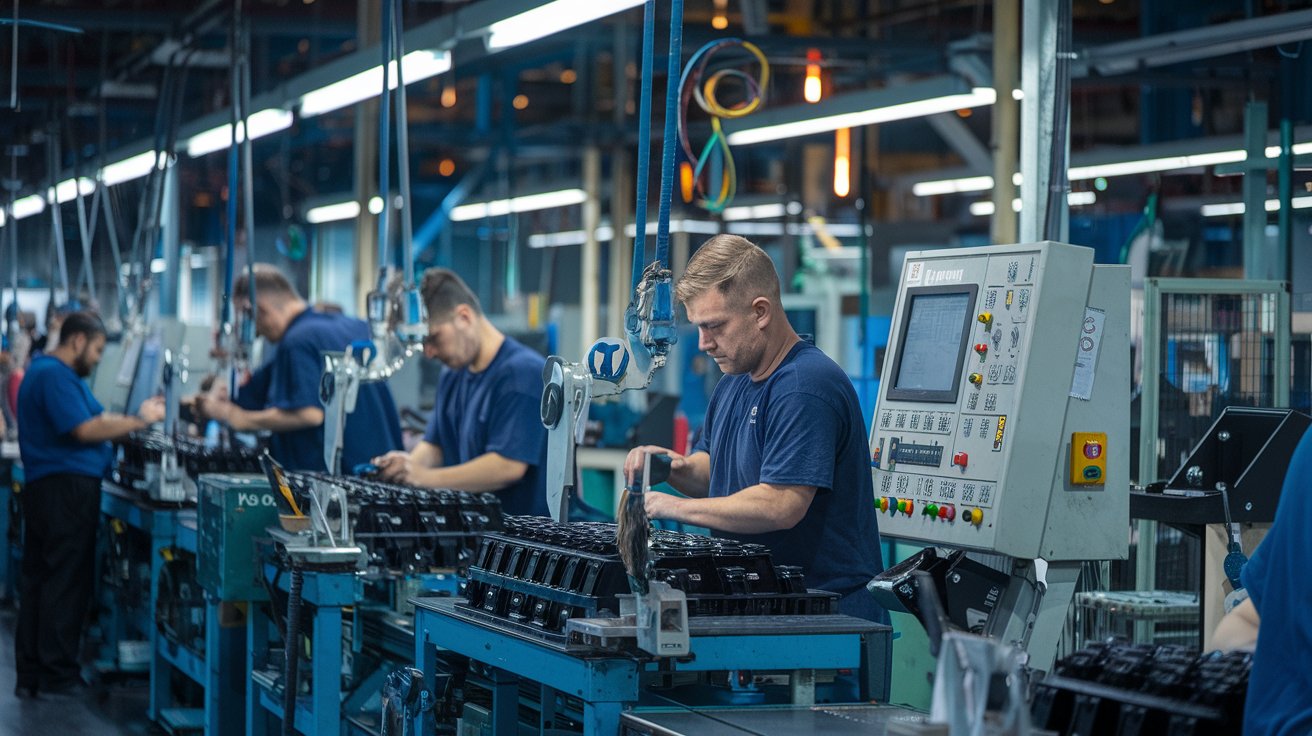
Employee engagement in manufacturing industry has become a critical competitive advantage, with engaged manufacturers reporting 31% higher productivity and 40% lower turnover rates. This comprehensive guide explores proven strategies, engagement factors, and practical activities specifically designed for manufacturing companies in 2026.
What is Employee Engagement in Manufacturing?
Employee engagement in manufacturing represents the emotional commitment and investment workers have toward their company, its mission, and their daily responsibilities on the factory floor. Unlike simple job satisfaction, engagement measures how connected employees feel to their work environment, colleagues, and organizational goals. In manufacturing settings, this translates to workers who actively participate in safety protocols, suggest process improvements, and maintain consistent quality standards without constant supervision.
The manufacturing industry faces unique engagement challenges due to repetitive tasks, shift work, and potentially hazardous environments. However, engaged manufacturing employees demonstrate 62% fewer safety incidents and contribute to 23% higher profitability compared to disengaged counterparts. Modern manufacturing engagement encompasses both operational excellence and personal fulfillment, creating a workplace where employees feel valued, heard, and integral to the company’s success.
Why Employee Engagement is Important in Manufacturing
Manufacturing companies with highly engaged employees consistently outperform their competitors across multiple metrics. Research from 2025 manufacturing surveys indicates that engaged workforces generate 18% higher revenue per employee and experience 12% better customer metrics. The direct correlation between engagement levels and business outcomes makes this a strategic priority for manufacturing leaders.
Enhanced Productivity and Quality
Engaged manufacturing workers produce quality products at significantly higher rates, with studies showing 41% lower defect rates and 70% fewer safety incidents. When employees feel emotionally invested in their work, they naturally pay closer attention to detail, follow procedures more consistently, and take ownership of product quality. This translates to reduced waste, fewer customer complaints, and improved manufacturing efficiency that directly impacts the bottom line.
Reduced Turnover and Training Costs
Employee retention in manufacturing becomes significantly easier when engagement levels are high, with companies reporting up to 59% lower turnover rates. Considering that replacing a manufacturing employee costs approximately $15,000-$25,000 including recruitment, training, and lost productivity, engagement initiatives provide substantial return on investment. Engaged employees also serve as informal mentors to new hires, accelerating the onboarding process and maintaining institutional knowledge.
The 5 C’s of Employee Engagement in Manufacturing
The 5 C’s framework provides manufacturing leaders with a structured approach to building comprehensive engagement strategies. This model addresses the core psychological needs that drive employee motivation and commitment in industrial settings.
Care and Recognition
Manufacturing employees need to feel genuinely cared for by their supervisors and organization. This includes recognizing their contributions through formal programs, safety achievements, and process improvements. Companies implementing monthly recognition ceremonies report 27% higher engagement scores and improved team morale across all shifts.
Connect and Communication
Effective communication in manufacturing environments requires multiple channels due to noise levels, shift patterns, and diverse communication preferences. Successful manufacturers use digital boards, team huddles, suggestion boxes, and mobile apps to ensure information flows effectively. Regular feedback sessions and open-door policies help employees feel connected to leadership and company decisions.
Coach and Develop
Career development opportunities significantly impact employee engagement levels, with 87% of manufacturing workers stating that learning new skills increases their job satisfaction. Companies offering cross-training, certification programs, and internal promotion paths retain talent longer and build more versatile teams capable of adapting to technological changes.
4 Pillars of Manufacturing Employee Engagement
The four pillars framework focuses on foundational elements that support sustained engagement in manufacturing environments. These pillars work synergistically to create workplace conditions where employees can thrive professionally and personally.
Purpose and Meaning
Manufacturing employees need to understand how their daily tasks contribute to the company’s mission and customer satisfaction. Purpose-driven engagement involves connecting individual roles to broader outcomes, whether producing medical devices that save lives or components that enable renewable energy. Companies that effectively communicate purpose see 64% higher engagement scores and improved employee advocacy.
Autonomy and Decision-Making
While manufacturing requires standardized processes, providing employee autonomy within defined parameters increases engagement and innovation. This includes empowering workers to suggest improvements, make quality decisions, and participate in problem-solving initiatives. Teams with higher autonomy levels report 43% less burnout and generate 67% more improvement suggestions.
7 Key Factors of Employee Engagement
Manufacturing companies must address seven critical engagement factors to create comprehensive workplace satisfaction. These factors interact dynamically and require ongoing attention to maintain optimal engagement levels across diverse manufacturing environments.
Leadership quality emerges as the most influential factor, with 75% of engaged employees citing their direct supervisor as the primary reason for their commitment. Other factors include work-life balance, compensation fairness, growth opportunities, workplace safety, team relationships, and organizational culture alignment.
Practical Employee Engagement Activities for Manufacturing
Implementing engaging activities requires consideration of manufacturing constraints including shift schedules, safety requirements, and production demands. Successful activities must be inclusive, accessible, and aligned with operational realities while providing genuine value to participants.
Fun Activities for Manufacturing Companies
Fun activities in manufacturing settings can include safety-themed competitions, skills contests, themed dress days that comply with safety requirements, and team-building exercises during break times. Monthly pizza parties, achievement celebrations, and volunteer opportunities help build camaraderie while respecting production schedules and safety protocols.
Inexpensive Employee Engagement Ideas
Budget-conscious manufacturers can implement inexpensive engagement activities such as employee spotlight programs, suggestion box systems with small rewards, peer recognition boards, flexible scheduling where possible, and cross-training opportunities. These low-cost initiatives often generate the highest engagement returns because they focus on recognition and personal development rather than monetary incentives.
Employee Retention Strategies in Manufacturing
Retention strategies in manufacturing must address both engagement and practical concerns such as career advancement, compensation competitiveness, and work environment quality. Companies implementing comprehensive retention programs report 45% lower turnover and 38% higher employee satisfaction scores compared to industry averages.
Successful retention approaches include mentorship programs pairing experienced workers with newcomers, clear promotion pathways from operator to supervisor levels, competitive benefits packages including health insurance and retirement plans, and continuous improvement initiatives that involve employee input. These strategies create emotional and practical reasons for employees to remain committed to their manufacturing careers.
Measuring Employee Engagement Success
Manufacturing companies need robust measurement systems to track engagement progress and identify areas requiring attention. Key metrics include employee satisfaction survey scores, turnover rates by department and shift, safety incident frequency, productivity measurements, and quality indicators. Regular pulse surveys provide real-time feedback while annual comprehensive assessments offer detailed insights into engagement trends.
Advanced manufacturers are implementing predictive analytics to identify engagement risks before they result in turnover or performance issues. By monitoring patterns in attendance, productivity, and survey responses, companies can proactively address concerns and maintain high engagement levels across their workforce.
Related video about employee engagement in manufacturing industry
This video complements the article information with a practical visual demonstration.
Key Questions and Answers
What are the 5 C’s of employee engagement?
The 5 C’s of employee engagement are Care (showing genuine concern for employees), Connect (building relationships and communication), Coach (providing development and guidance), Contribute (enabling meaningful work), and Congratulate (recognizing achievements). In manufacturing, these translate to safety focus, clear communication systems, skills training, process improvement involvement, and regular recognition programs.
What are the 4 pillars of employee engagement?
The 4 pillars of employee engagement include Purpose (meaningful work connection), Autonomy (decision-making authority), Mastery (skill development opportunities), and Progress (career advancement). Manufacturing companies implement these through mission communication, empowered quality decisions, cross-training programs, and clear promotion pathways from floor to management positions.
How can manufacturing companies increase employee engagement on a budget?
Inexpensive employee engagement strategies include peer recognition programs, suggestion boxes with small rewards, flexible scheduling where possible, cross-training opportunities, employee spotlight features, and team competitions. These low-cost initiatives focus on recognition and development rather than expensive perks, often generating higher engagement returns.
What factors most influence employee engagement in manufacturing?
The seven key factors are leadership quality, workplace safety, career development opportunities, fair compensation, work-life balance, team relationships, and organizational culture. Manufacturing environments particularly emphasize safety leadership, since 75% of engaged manufacturing employees cite their direct supervisor’s safety commitment as a primary engagement driver.
How do you measure employee engagement success in manufacturing?
Manufacturing engagement measurement includes employee satisfaction surveys, turnover rates by department, safety incident frequency, productivity metrics, quality indicators, and absenteeism rates. Successful companies use quarterly pulse surveys and annual comprehensive assessments, with advanced manufacturers implementing predictive analytics to identify engagement risks before they impact performance.
| Engagement Strategy | Implementation Method | Expected Benefit |
|---|---|---|
| 5 C’s Framework | Care, Connect, Coach, Contribute, Congratulate | 27% higher engagement scores |
| Recognition Programs | Monthly ceremonies, peer nominations | 59% lower turnover rates |
| Safety Leadership | Supervisor training, safety competitions | 62% fewer safety incidents |
| Career Development | Cross-training, certification programs | 43% less employee burnout |
| Communication Systems | Digital boards, team huddles, mobile apps | 31% higher productivity |

